June 1-3, 2026.
It was my first visit to Lo Manthang, Upper Mustang. The two-day journey, people I met along the way, places I stopped by, and the culture I experienced widened the horizon of my consciousness. Like Ernest Hemingway says that travel should be “a deeply personal experience,” it remained so. It not only became a physical journey, but also mental, psychological, and emotional one, like what Rainer Maria Rilke suggests in The Only Journey is the One Within — “the most profound one.
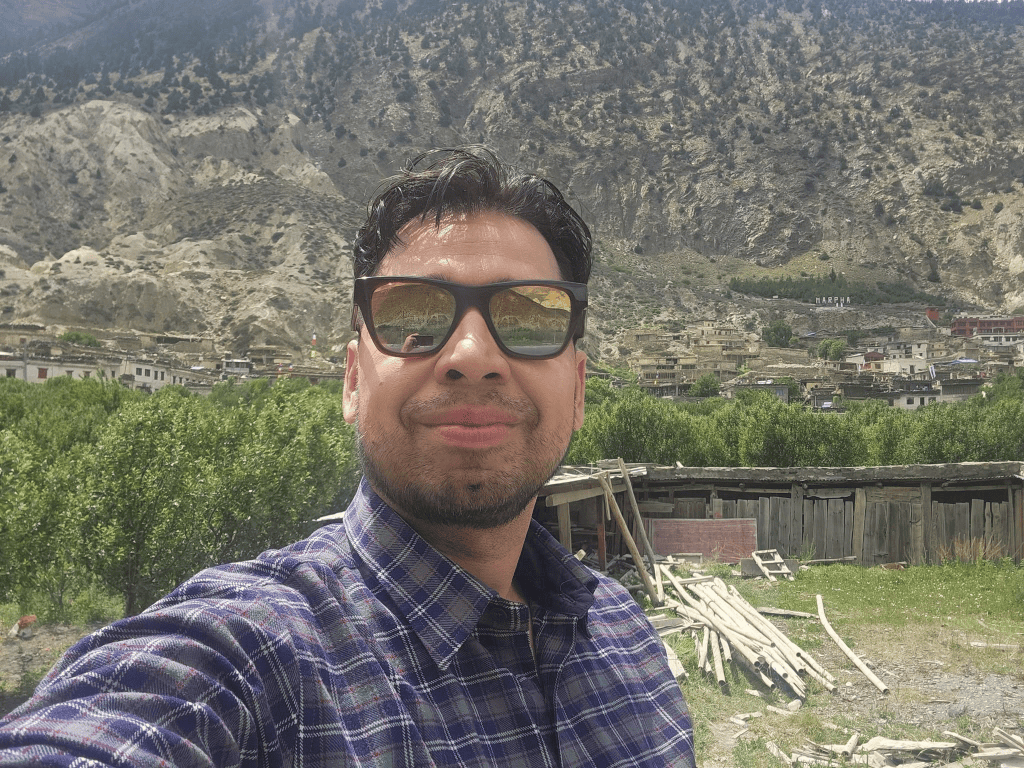
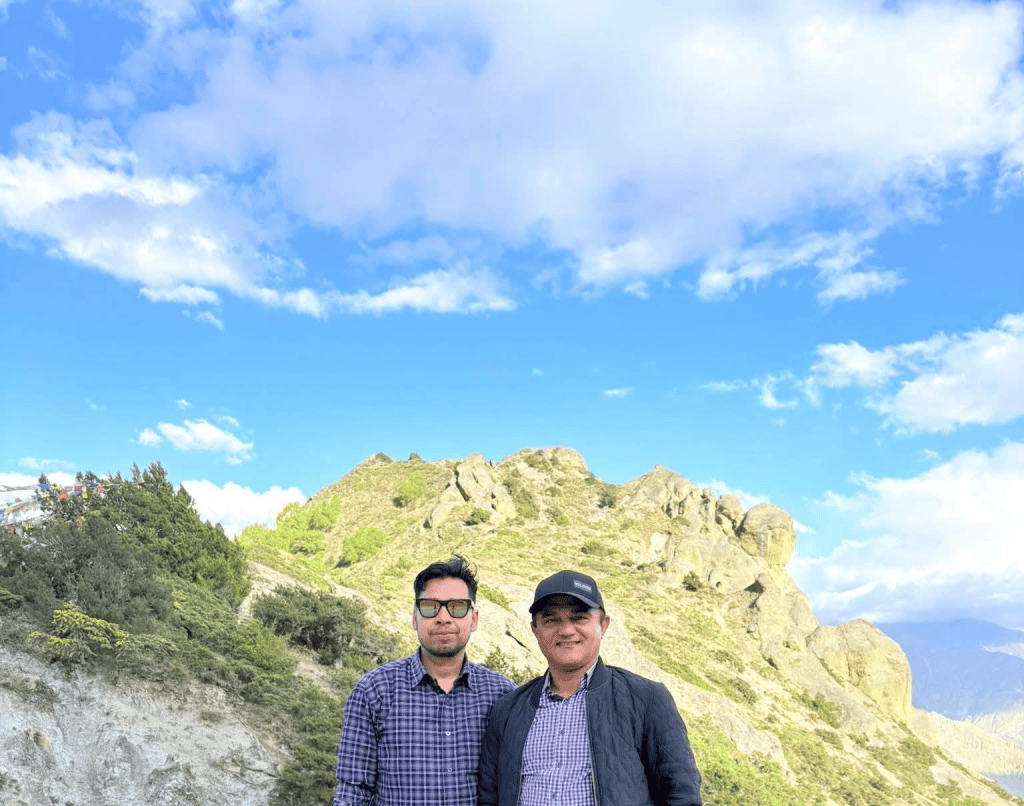
Our purpose of going there was to disseminate the results from our research on senior citizen care, a project I was involved in. In our team were: Dr. Kharal, a medical doctor; Jitendra, a four-wheeler driver; Sriya, an administrative officer; and Moharaj Sharma, a media person, and me. We flew from Kathmandu to Pokhara. Jitendra picked us up at 8 am at the airport, and we headed to Upper Mustang right after that.
We passed the corridor of the Seti River. On the way, we stopped by a tea stall for breakfast after crossing Kusma. Near Beni Bazaar, we enjoyed fresh bread, sel roti, Aluko tarkari, and hot milk tea. The stall was set at the lap of the hills. Nearby, crystal-clear water cascaded. The weather was pleasant. We washed our hands in the water flowing freely from the pipe; I even drank straight from it from my cupped hands. I wondered: how important this water would be for the people of Kathmandu who suffer from a chronic shortage of drinking water.
After breakfast, we climbed back into our four-wheel drive vehicle and continued. We traveled almost entirely along the corridor of the Kali Gandaki River until we reached Jomsom for lunch. Since we would not reach our destination that day, we had planned to spend the night in Chhusang.
I had traveled to Lower Mustang with my wife to visit Muktinath, a sacred place known for pilgrimages mostly from Nepal and India, about ten years ago, and at that time the journey had been nerve wracking. The roads were narrow and uneven, serpentine along steep cliffs and terrifying rocky hills, with frequent landslides. Back then, I had promised to comfort myself that I would never return. But this time, the roads were surprisingly good, smooth, except for a few interruptions caused by mudslides and the naturally rugged, windy terrain. Also, our mode of transportation was a comfortable four-wheel drive, not the bus.
“Do you know what surnames the people of Upper Mustang have?” Dr. Kharal, who had visited Upper Mustang two times before, said. Of course, I wouldn’t know.
“There are mainly two surnames: Gurung and Bista,” he said with a smile flickering on his face.
I later would discover the answer while reading Tarkin, a novel by Chhitis Samarpan. Many people in Upper Mustang historically did not have fixed surnames, and many of them migrated from Tibet, including the latest one after the 1959 Tibetan uprising. When citizenship certificates became necessary, government officials assigned surnames to them. Those whose physical features resembled Mongolian communities were often given the surname Gurung; those who were considered connected to the royal lineage or local elites were assigned the surname Bista, a name commonly associated with the Chhetri community.
We stopped at Tatopani, a village in Nepal’s Myagdi District famous for its natural hot spring and for healing and ritual purification. Locals and trekkers use them to soothe sore muscles, ease joint pain, and recover from high‑altitude trekking.
“Tulasi ji, can you please…?” Mohraja ji said handing me his phone to film him and take some pictures.
As we drove north, Annapurna and Dhaulagiri appeared magically close as if it was going touch my nose. They glittered like gold in the sunlight.
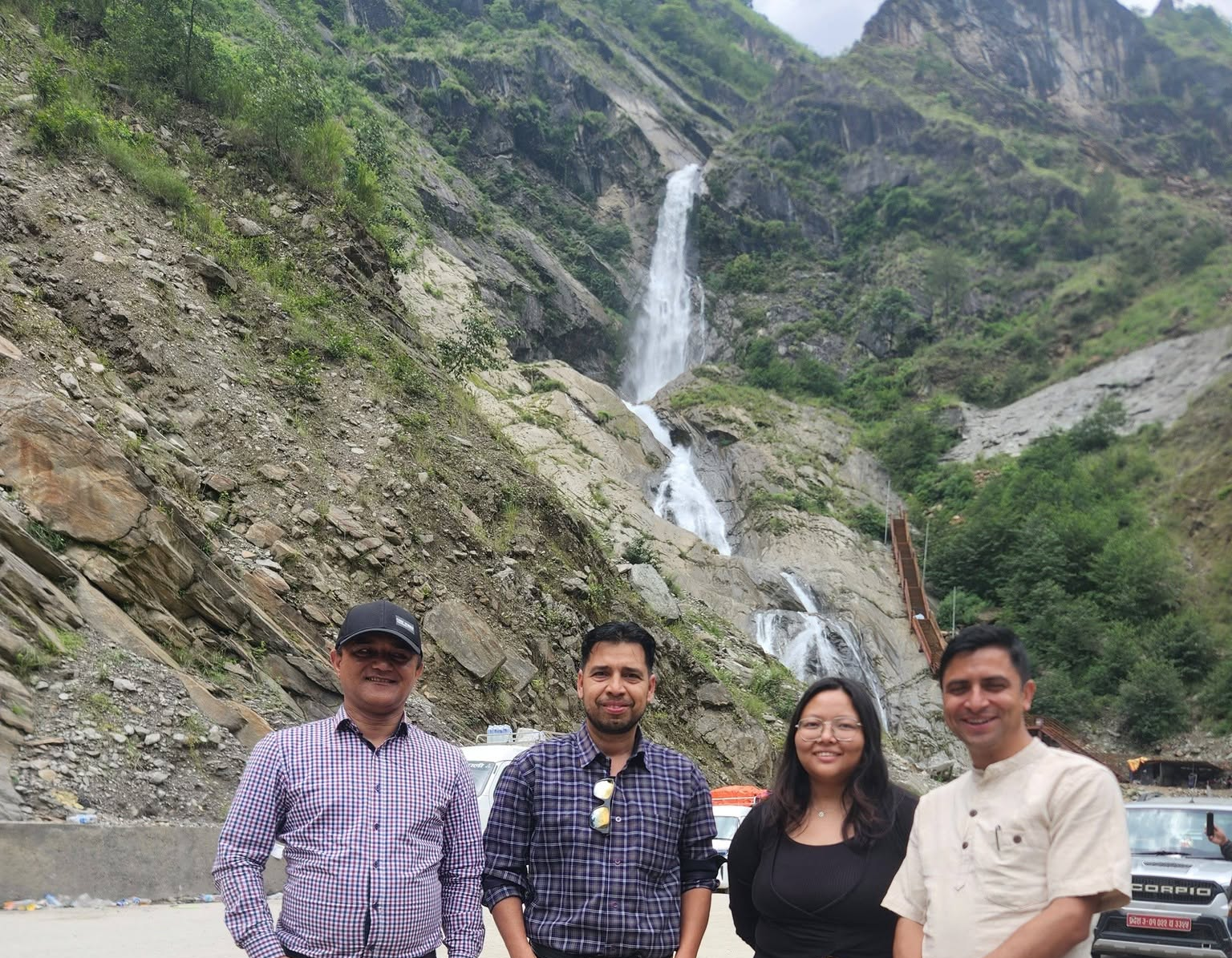
Further along the road, we reached Rupse Falls, one of the tallest waterfalls in the Myagdi District. The waterfall plunged gracefully down the mountainside like a dancing nymph with a drape of white sari falling from heaven, and its water mingled into the Kali Gandaki River. Wow! I gasped. Nepal is blessed with extraordinary landscapes and breathtaking scenery that few countries in the world can ever beat. A throng of tourists continued to take pictures, their cameras flashing.
We also passed the famous Kavre Bhir, a towering cliff known for both its height and its dizzy appearance. Looking up at it almost made my neck and heart break. The landscape throughout the journey was dramatic, adventurous, rugged, jaw-dropping, and awe-inspiring.
We launched at a hotel in Jomsom. Daal, Bhat, green vegetables, omelets, local ghee and chicken, yogurt and mango pickles were served, and we devoured all of those; we even licked the plate at the end, feeling full and satiated. The town is well known for its cool climate and afternoon winds, which usually begin around twelve o’clock. Because of these strong afternoon winds, flights to and from Jomsom Airport, the only airport in the region, are usually scheduled early in the morning, before the wind becomes too intense for the landing and takeoff. The weather reminded me of the famous Nepali song: “Jomsom bazarma, baara baje hawa sarara…” The song suddenly started playing in my mind as we loitered briefly after meal beholding the apple Ladden branches.
“Jomsom is famous for its apples,” the driver who has frequently driven on the route said. “Apple orchards cover much of the surrounding area, and the town is renowned for its fresh apples, dried apples, and apple brandy. Peaches are also grown here in abundance. They are sliced, dried, and sold throughout Nepal.”
“Are you okay?” I said seeing Sriya silent. “Are you enjoying?”
“Yes, Sir,” she said putting a smile on her face. She listened to our conversations and laughed as we cracked jokes on the idea of what we would do if Dr. Kharal himself became sick at the high altitude.
We passed Kagbeni, one of the villages along the route, which is famous for religious reasons. Many people who have lost their parents go there to perform shraddha or other ancestral rituals, believing their departed parents attain peace in heaven. Once we reached the junction that leads to Muktinath, we continued on the road toward Lo Manthang. The grabbled, dusty, and uneven roads began, but still not bad.
“These routes are for the trekkers,” the driver said pointing some small route at a distance. “Mostly foreigners come here and ride their bicycles.” This is amazing that we have yet to explore our own geography while people from another part of the world have already trodden.
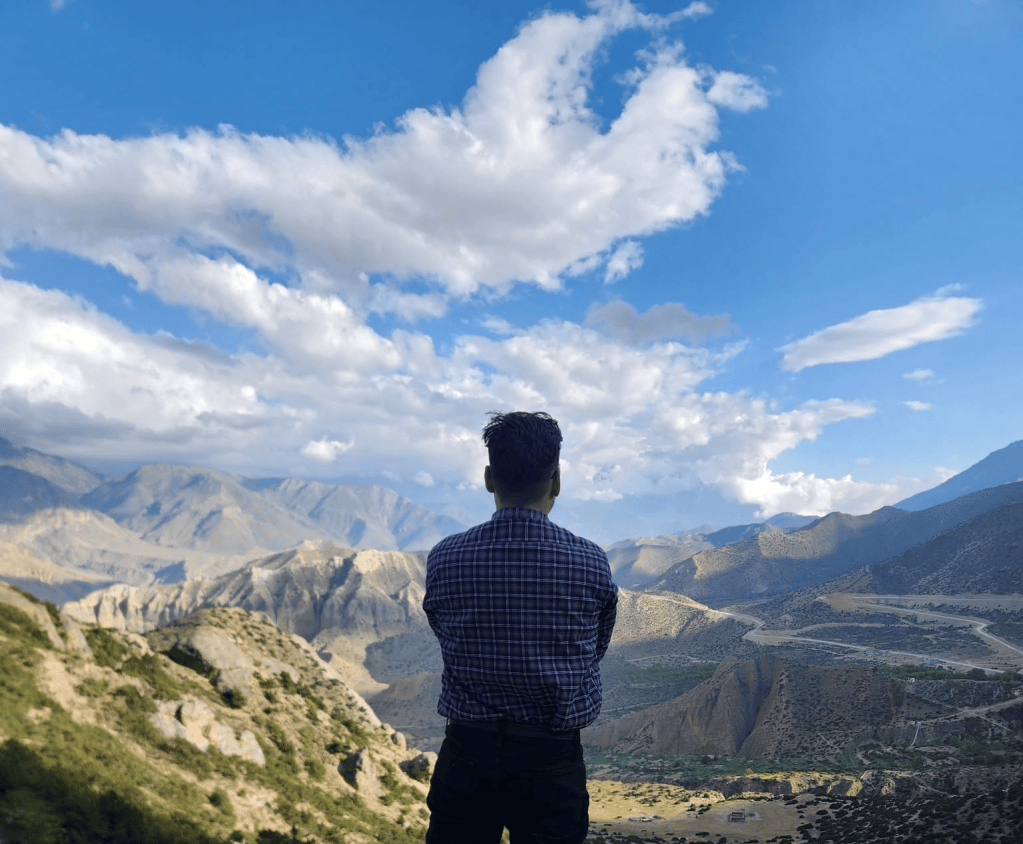
After we passed Lower Mustang, the landscape changed dramatically. The green vegetation vanished, replaced by barren and dessert like mountains, rocky cliffs, and sandy hills sculpted by nature. The mountains appeared in countless shapes and forms. At times, they even looked animated. They even resembled magnificent sculptures created by divine hands. As I looked outside the window of our four-wheeler, I could almost see their figures carved into the mountainside. They reminded me of the thirty-three million gods in Hindu tradition, also reminded me of intricate wooden carvings at the Pashupatinath Temple. Some appeared seated in meditative Asanas, postures resembling the symbolic and artistic expressions often found in traditional temple carvings. The mountains looked alive, as though they possessed souls of their own.
“The landscape had been shaped over countless years by powerful winds, snow, rain, and erosion,” Jitendra said. “These natural forces continuously sculpted the soft rock into extraordinary formations.” Even in the article “Sedimentary history of the Tethyan basin in the Tibetan Himalayas,” Guanghua Liu & G. Einsele wrote about how over millions of years, wind, water, freeze–thaw weathering, and erosion sculpted these rocks into the dramatic cliffs, caves, and pinnacles that characterize Mustang today. Geologists have explained that. Some cliffs resembled giant hanging balconies; others looked like paintings or frozen waterfalls suspended from the mountainside. Nature itself looked like the greatest artist and art itself.
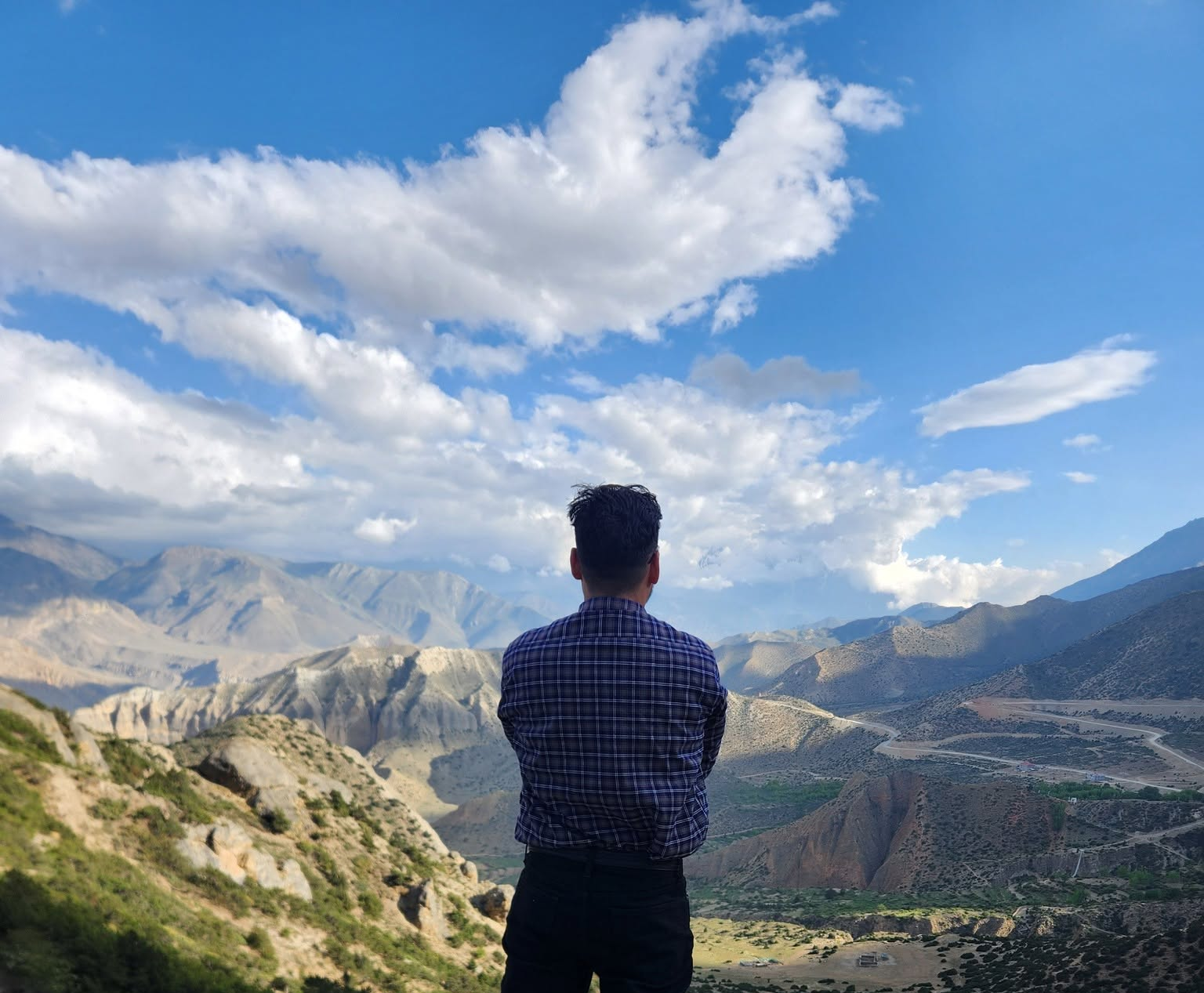
Growing up on the Teria belt, I always thought that the Himalayas were in the north. But as I entered Upper Mustang, something unexpected happened. Suddenly, the snow-capped peaks appeared to the south instead of the north. Then I realized why Manang and Mustang are often described as districts beyond the snow-clad Himalayas. That simple change challenged a deeply rooted assumption I had unconsciously carried throughout my life—that the Himalayas always belonged in the north. This understanding sifted my perspective, worldview, and the concept of truth. Mark Twain once said, “Travel is fatal to prejudice, bigotry, and narrow-mindedness.” The journey quietly deconstructed my existing belief and reminded me how travel could reshape not only our geography, but also our consciousness and worldviews.
From Jomsom to Kagbeni to Chhusang, where we spent our night, to Chele to Syangboche to Ghami to Tsarang, eventually, we reached the small pillar that marked Lo Manthang, also a region bordering Tibet, welcoming the visitors. We stood there at an elevation of approximately 3,840 meters above sea level. Since Dr. Kharal had given us medication to prevent altitude sickness, we felt fine, except for occasionally my hands felt numb and my body slightly tingly as side effects of the medicine. We laughed about these sensations throughout the journey, jokingly blaming Dr. Kharal and warning him if anything happened to our body. But the terrific view of Lomanthang surpassed the sensations.
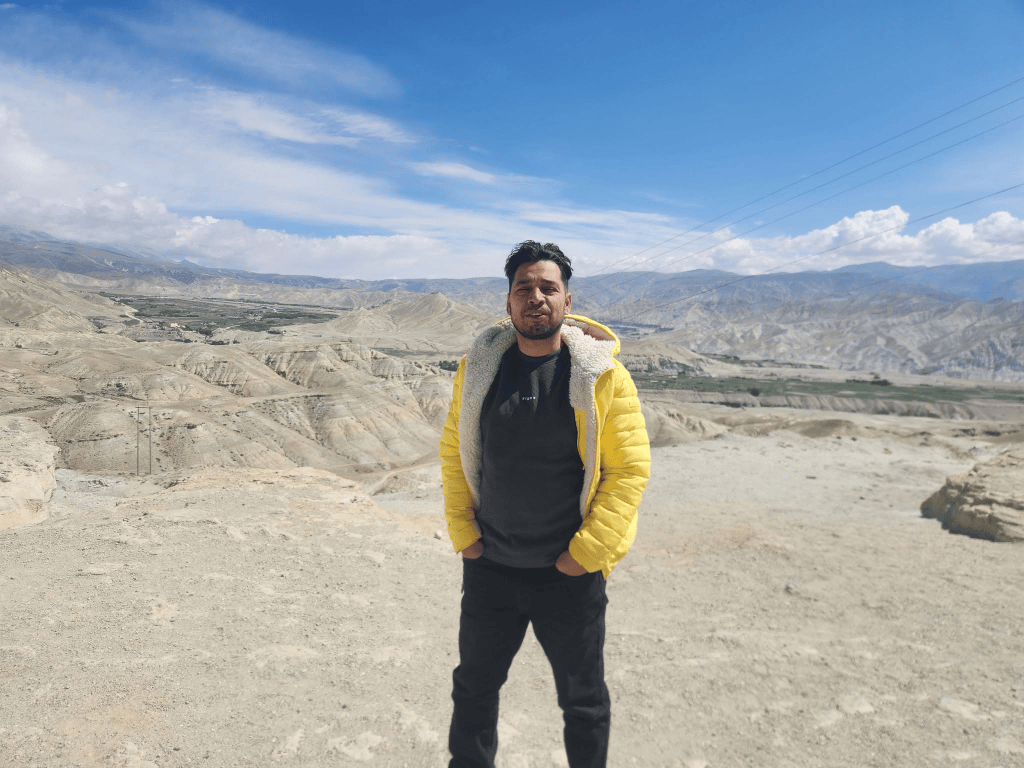
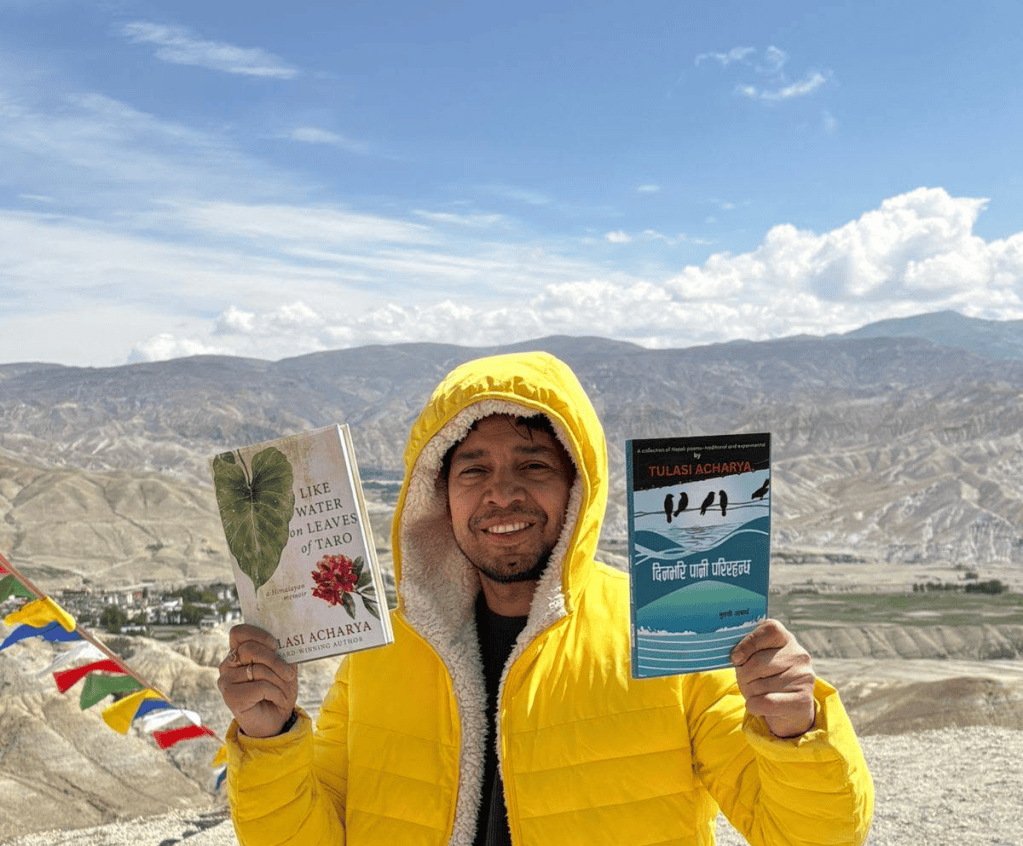
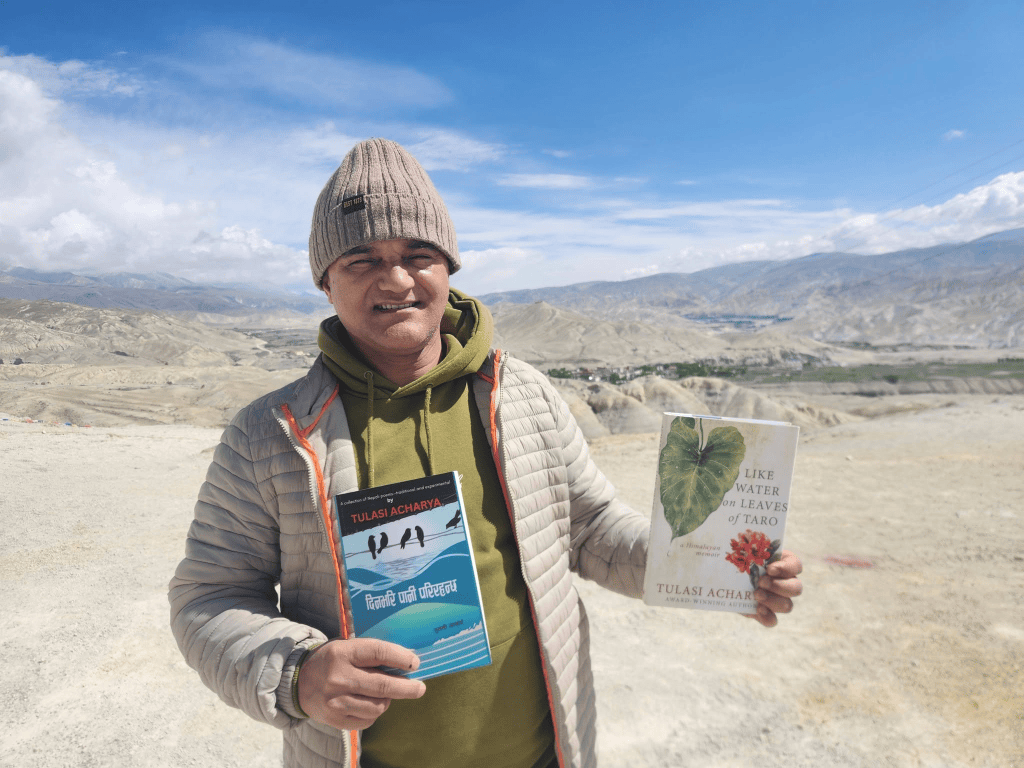
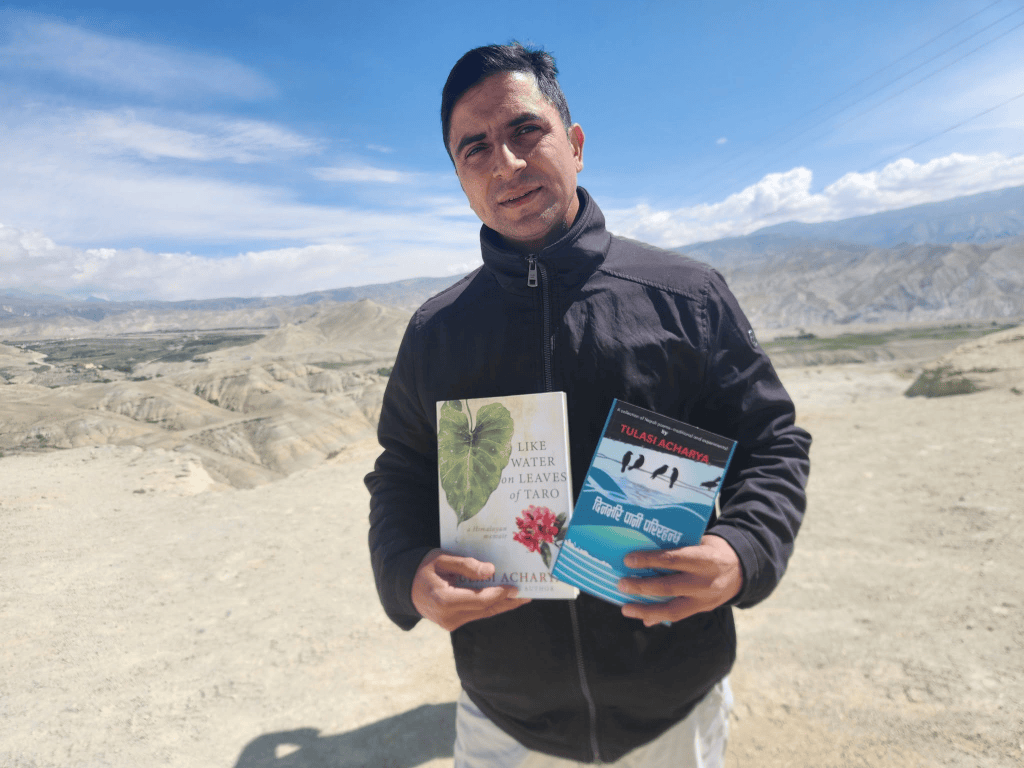
After arriving in Lo Manthang, I took out two books I had carried with me: Like Water on Leaves of Taro: A Himalayan memoir (An award-winning memoir) and a collection of Nepali experimental poems, Dinbhari Pani Pariranchha. I had carried them with me so that I could launch those books while standing in one of Nepal’s most remote Himalayan landscapes one could rarely reach. There I read a few poems aloud to the cool wind playing like a flute.
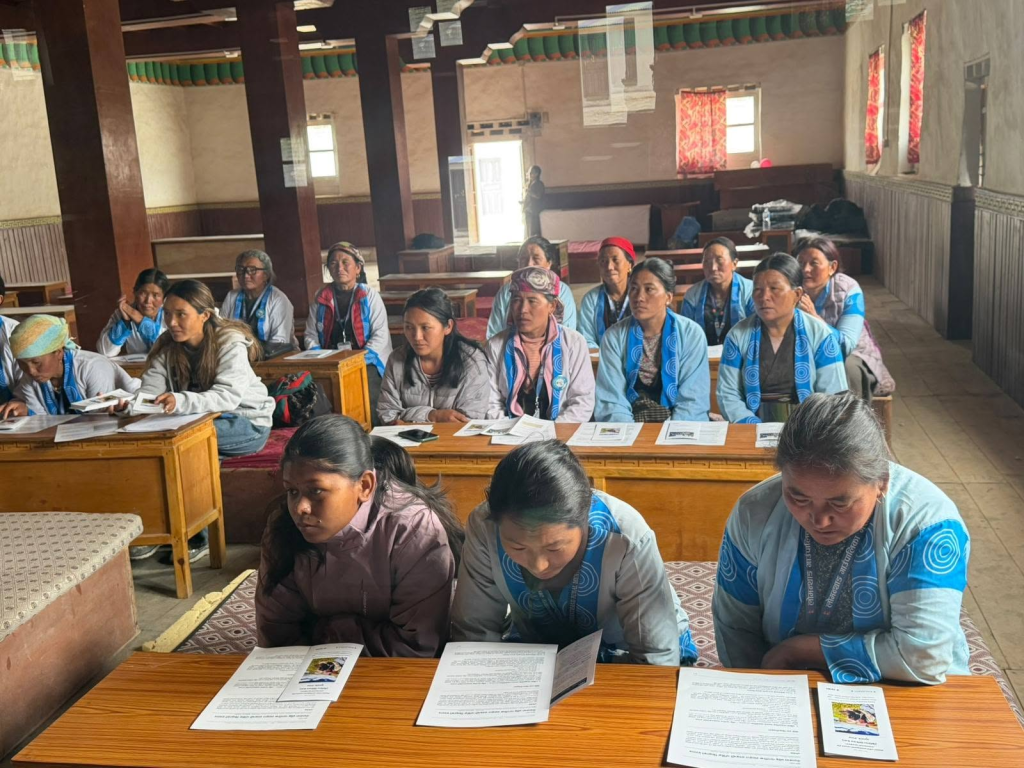
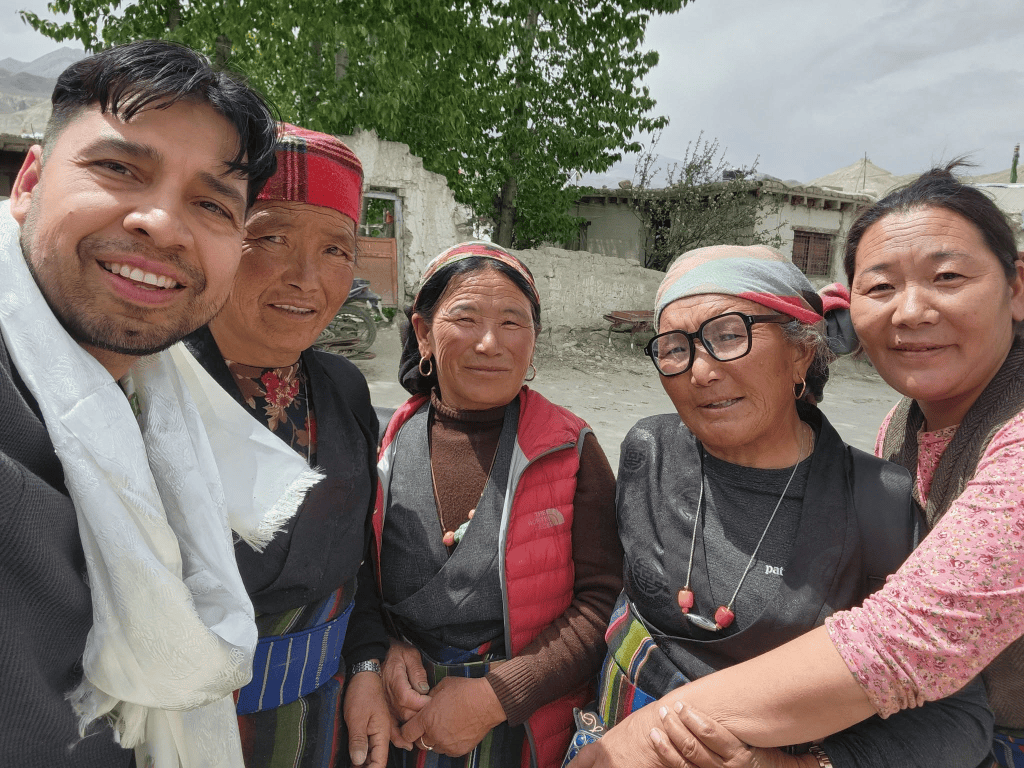
The locals were already gathered to welcome us. We presented the findings from the first phase of our study on the health conditions of older adults in the region. The research revealed that many senior citizens (65 plus) were living alone because their children had migrated abroad for employment or education or both. They had to care for themselves with limited family support and inadequate healthcare services. We found high rates of hypertension, difficulty with daily living activities, and other age-related health conditions among the 188 senior citizens who participated in our study. We explained our findings to the local community, even highlighted the lack of social and emotional connections to people and assured them that the second phase of our project would include regular blood pressure monitoring and other health and policy interventions.
During our stay for a few hours, the breeze in the mountain blew and Darjyu, the colorful Buddhist prayer flags fluttered continuously, reminding us of the region’s deep Buddhist heritage and ethnic cultural ambience. After completing our work, we returned. We were exhausted, but we carried with us rich sense of the place and people— a profound sense of fulfillment. The journey had not only widened my understanding of the Himalayas but had also transformed the way I looked at nature, history, and human life, helping me imagine life and history in other remote regions of the country, such as Dolpo, Olangchunggola, Rukum, and Rolpa. On the way back, we saw local people selling shaligrams, the sacred fossil stones found in the Kali Gandaki River, revered by Hindus as natural manifestations of Lord Vishnu. I bought one as memento of my memorable journey that I could respect and revere forever.


Leave a Reply