
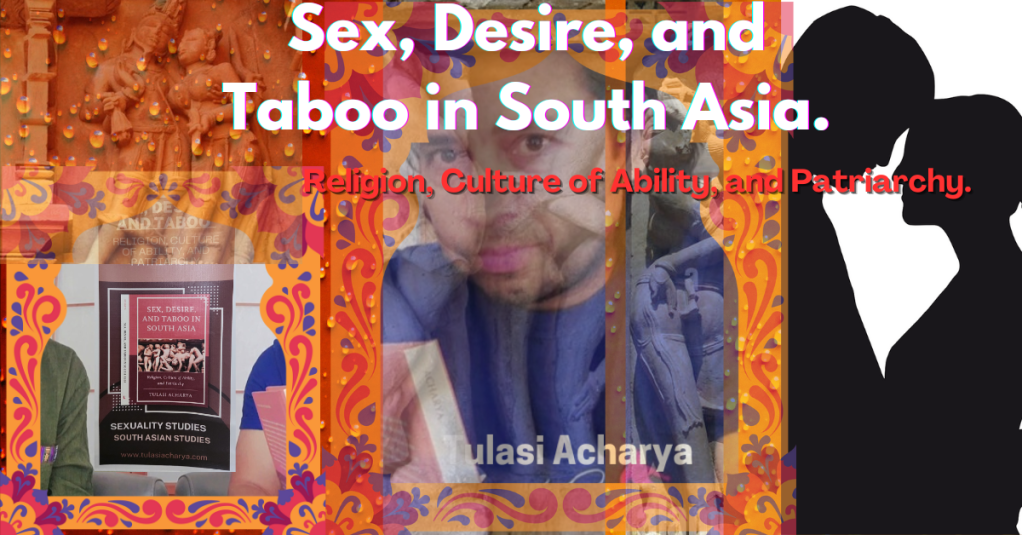
This conversation explores the complexities of sexual taboos and expressions in South Asian and European contexts, focusing on the interplay between cultural norms, religious doctrines, and patriarchal structures. Dr. Taylor, who has studied erotic literature in medieval Europe, compares this with South Asian views on sexuality, which are marked by a striking contrast between open artistic expressions and societal repression. The author’s book, “Sex, Desire, and Taboo in South Asia: Religion, Culture of Ability, and Patriarchy,” delves into how historical shifts, particularly patriarchal and religious influences, have shaped current taboos around sexuality. The discussion highlights how these taboos are reinforced by both societal values and religious interpretations, and underscores the importance of education in challenging these norms. This dialogue suggests that while South Asian religious art displays sexual themes, societal attitudes remain conservative, revealing a significant gap that could be addressed through improved education and awareness.
Dr. Taylor: The literature I’ve studied breaks a lot of taboos in various areas. I can understand this perspective from a medieval European background, but I’ve always thought that pre-modern European civilization has more in common with Asian cultures than modern European civilization does. It seems that after the Middle Ages, there was a break toward what would eventually become modernism. So, I can be somewhat informed when discussing it from that standpoint, though I can’t speak specifically about your book. However, I can ask you questions that I hope are addressed in your book, and you can provide insights as the author.
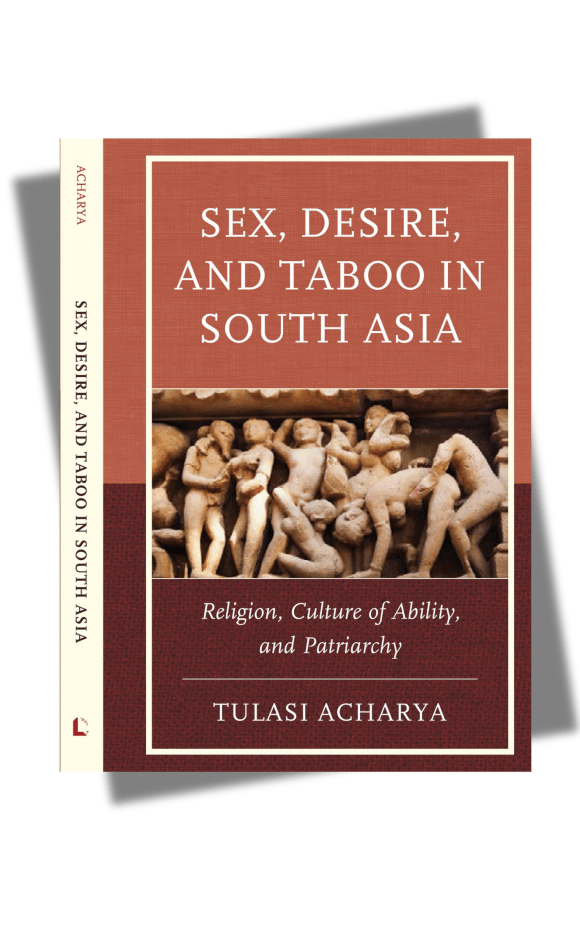
Author of the book: Definitely. I mean, this is the book “Sex, Desire, and Taboo in South Asia: Religion, Culture of Ability, and Patriarchy”, so thank you for being here with me to discuss it. Here we have Professor Mark Taylor, and we’re talking about my book, which has recently been published. The idea of sex is still considered taboo, not only in the South Asian context but also in the European context to some extent. However, in the South Asian context, it’s perhaps even more taboo because sex and desire are often linked to concepts of morality, immorality, social prestige, and family honor. This is especially true when it comes to women’s sexuality, which people are often reluctant to discuss. What intrigued me most about this topic is the contrast in South Asia. On one hand, we have temples and religious scriptures filled with erotic art—astonishing depictions that are so detailed and vivid. It’s mind-blowing that these artistic expressions exist in a society where people are hesitant to talk about sex openly. For example, it’s considered inappropriate for a husband and wife to hold hands or kiss in public, yet the same couple might encounter explicit erotic art in temples. It’s a stark contrast between public behavior and what is depicted in sacred spaces. This is also the land where the Kamasutra originated, often referred to as a sexual manual, or even literature that views sex as an art form. So, why is there such a big gap between what society says and what has been historically depicted? Why is this topic still considered taboo? These are some of the complex and contradictory issues that intrigued me and led me to research this subject further.
Dr. Taylor: These are exactly the questions I had. When I was in Nepal, I observed these contradictions, especially after having read the Kamasutra and similar texts. I understand that contradictions are inherent in all cultures, but what I want to know is: why this particular contradiction? Why here, and why now? Why this specific history? Not all cultures have the same taboos or attempts to moralize sexuality. For instance, many African cultures may evaluate sexual behavior in terms of family or prestige, but they don’t necessarily moralize it in the same way. So I’m curious—why has this happened on the Indian subcontinent? I’m eager to hear your explanation.
Author of the book: Yes, so you’re more interested in understanding why sex has been considered taboo in the Indian context.?
Dr. Taylor: Why do you have open expressions of sexuality in some aspects, yet a repression of that same sexuality in others?
Author of the book: Yes, I think that’s something I’ve tried to explore in this book. When you read it, your question will be answered, though I won’t delve too deeply into that topic here. However, I do touch upon those ideas. As I conducted research, I found that in the past, concepts like jealousy, sexism, and taboos around sex weren’t as prominent. Society was more open, but over time, it became more closed. Gradually, the idea of women’s sexuality became tied to family honor and prestige, leading to the rise of patriarchal norms that sought to control and dominate women’s sexuality. This shift brought about rigid distinctions between what was considered right or wrong, true or false, especially regarding sexuality. Sex became a tool for domination, particularly over women and marginalized groups. Even the way religious content is interpreted has shifted, with sexuality often being portrayed as an immoral topic. These patriarchal values became deeply ingrained, influencing later generations and solidifying the taboo around sex. My book discusses how these patriarchal structures developed, why they came into play, and how they have continued to enforce these taboos.
Dr. Taylor: I know you explore it in more detail in the book, but as an overview, at what point in history does it seem to you that sexuality was an open part of the culture? And what caused the shift? Was it specific religious doctrines, a new kind of patriarchal culture, or perhaps different groups who came into power? What specifically happened to bring about this change?
Author of the book: I think that’s a very good question. In my understanding, in ancient times, people did not consider sex as much of a taboo. Over time, however, sex became a tool of power used against marginalized groups. This shift didn’t originate from capitalism or the pursuit of economic benefits, but rather from deep-seated patriarchal values that emerged over time. Religion also played a significant role in this transformation. For example, I discuss a story in my book about a woman named Goma Brahmini, who fasted for a long time to find an ideal husband who was very old at first, but it turned out that the man was actually Lord Shiva in disguise, testing her devotion. This story illustrates how women were expected to endure hardships to find an ideal partner, reflecting the influence of patriarchal values. At the same time, these values were not equally applied to men. For example, in some temples, you see numerous lingams, which are phallic symbols, believed to have the power to help women conceive if they worship them. This highlights the male-centric power dynamics at play, where the focus is often on male desires and the control of female sexuality. So, the shift towards viewing sex as a taboo and a tool for power likely emerged from a combination of religious interpretations, patriarchal control, and societal values that evolved over time.
Dr. Taylor: This is a very abstract concept, and while women are naturally thinking about having children, the literal aspects of how children are conceived, as well as the depiction of those means, have been abstracted. Is it possible to consider these things without directly thinking about the sexual act itself?
Author of the book: Yes, exactly. That’s why I’m saying that the idea of sex has been reduced to just procreation or having children, rather than being associated with human pleasure or sensuality. Over time, this interpretation became dominant, even in religious contexts. Patriarchal societies found advantages in this view, using it to control women’s sexuality. If a woman had engaged in sexual activity before marriage, it was considered immoral and disgraceful. This perspective led to sex being defined as something bad, immoral, and tied to concepts of family honor. These ideas became deeply ingrained and perpetuated over time.
Dr. Taylor: As religion and patriarchy work together to create these taboos based on moral terms, here’s a challenging question: Do you think these taboos originally arose from patriarchy and the need for male control, with religion being appropriated to support this agenda? Or do you believe that there is something inherent within these religions that demands moral standards, which were later reinforced by patriarchal structures?
Author of the book: I believe that patriarchy and religion feed into each other and inform one another. Most of the texts we have were written by men, reflecting male perspectives, narratives, and egos. These texts reinforce male dominance, but they also coexist with the presence of powerful female deities like Durga and Kali, who are highly revered. While there is respect for these goddesses, the narratives still fit within a male-centric framework. Many texts prescribe specific roles and responsibilities for women, often defining what they should or should not do in relation to their husbands. This creates a framework that supports patriarchal values. However, there are also alternative narratives and local stories that can be empowering for women. Some women scholars interpret these local narratives as uplifting and encouraging, highlighting a different aspect of women’s roles and experiences. On the other hand, much literature critiques the male narratives and patriarchal structures that have shaped views on sexuality. These perspectives argue that such structures prevent a fuller understanding of sexuality, which is valuable for quality of life and human well-being. In discussing these issues, I have drawn on theories from scholars like Gayatri Spivak and her subaltern studies. Spivak’s work critiques how patriarchal and religious morals continue to regulate women’s bodies and experiences. Her perspective suggests that to fully understand these issues, we need to consider local contexts and avoid imposing external interpretations. This approach helps us better grasp the complexities of how sexuality and gender are perceived and regulated in specific cultural settings.
Dr. Taylor: As you point out, it’s important to look at the context carefully. Do you see any correspondences between how taboos play out in South Asia and how they have played out in Europe?
Author of the book: That’s a very interesting question. I haven’t done extensive comparisons, but based on what I’ve observed, there are similarities and differences between how taboos about sex play out in South Asia and Europe. In American and European contexts, sex is considered taboo to some extent, but people generally recognize its importance and significance. Discussions about sex, such as in sex education, are often more open compared to South Asia. For instance, in Western countries, couples might be seen holding hands or kissing in public, and discussions about sex are relatively more accepted. In South Asia, however, the public expression of sexuality is much more constrained. While there is significant discussion about sex in terms of education and literature, it remains a sensitive subject in many areas of daily life. The contrast is also evident in how these topics are commercially approached; in both contexts, there are ways to capitalize on sexual content, but the approach and openness differ.
Dr. Taylor: How does presentation of sexual content reflect people’s prurient interests? For instance, have you noticed any patterns, such as higher instances of consumption or interest in specific areas related to sexuality?
Author of the book: But we don’t see the same patterns in the Southeast. The situation there reflects a different dynamic. While we might perceive ourselves as very advanced and open in comparison, there’s still a lot of pretense. Despite our claims of civility and development, there remains a significant level of conservatism and repression. I’m speaking from the perspective of Southeast contexts, where these contradictions are more evident. I believe this topic needs further exploration to understand these nuances better. It could also help address and improve sexual and gender policies that are being developed or implemented by governments in these regions.
Dr. Taylor: Are you suggesting that there is an imperative for change due to certain unhealthy aspects that you would like to see improved?
Author of the book: Yes, definitely. The hesitation to openly discuss this topic is evident. For instance, in classrooms where subjects related to sex are introduced, students often hesitate to participate. This reluctance stems from societal conditioning and ingrained taboos, which lead to feelings of shame and discomfort when discussing these topics openly. We lack public discourse on these topics, which perpetuates the taboo and its consequences. We’ve seen numerous incidents in news reports, such as cases of rape in India and Nepal. This highlights a significant gap. If there were greater awareness and a better understanding of how to address and handle discussions about sex, including its sensitivity, people might be better equipped to manage these issues. My point is that the lack of open dialogue contributes to the ongoing problems and incidents.
Dr. Taylor: One more question: In the West, openness about sexuality in art, music, theater, and other forms often comes at the expense of religion, with secularism prevailing in these presentations. Religion, particularly Christianity, has not traditionally engaged openly with sexuality, resulting in a lack of open discussions and depictions of sexuality, such as nude figures in churches. Even texts like the Song of Songs in Hebrew scripture are allegorized to focus on religious themes rather than sexuality. In contrast, South Asian religions like Hinduism have a tradition of openly displaying and discussing sexuality. Given this context, as we consider how to address and push back against taboos and create more openness, could such changes occur within the religious framework in South Asia, or would they necessarily require a secular movement as well?
Author of the book: That’s a difficult question, and I don’t have a definitive answer. However, openness about sexuality can be influenced by how well people understand and integrate sex education into their lives. If people are educated about sex and understand its significance for quality of life, this can help them better interpret religious literature and appreciate it from a more informed perspective. In South Asia, for instance, there is a tradition of open depictions of sexuality in temples, but societal attitudes often remain conservative. This discrepancy highlights the need for greater education and awareness. Even in countries with less open artistic expression like those in Europe, people tend to be more informed and open about these topics. In Nepal, despite the open display of sexuality in art and temples, the societal mindset remains conservative. This underscores the importance of education and awareness in changing attitudes. Until there is widespread education and a shift in societal attitudes, changes in religious or cultural contexts might be limited. Awareness and education about sexuality are crucial for societal change and for recognizing its significance in human life.
Dr. Taylor: Where would you start to introduce this kind of education? Which part of society would be the best place to begin implementing it?
Author of the book: This issue is multifaceted. In many areas, people have limited exposure to outside cultures and modern forms of media, which affects their openness. For example, more than 50-60% of people might lack access to education and basic infrastructure, such as roads. These challenges, including geographical barriers, significantly impact their ability to access resources and information. To address these issues, we first need to ensure that infrastructure and access to education are improved. Once people have better access to education, we can introduce various programs and resources into schools. This will help raise awareness and facilitate a more open discussion about these topics.
Dr. Taylor: So you will begin with schools?
Author of the book: Yes, definitely. Schools are a crucial starting point. While workshops and training programs can also play a role, focusing on schools and colleges is essential. Introducing a curriculum that promotes open discussions about these topics can help create a more informed and accepting environment.
Dr. Taylor: Because these practices, including certain tantric practices, have their origins there, you can present them in a way that reflects their cultural roots rather than appearing as a European idea.
Author of the book: Okay, yes, those are the points. I really want to thank you for asking these questions.


Leave a Reply