
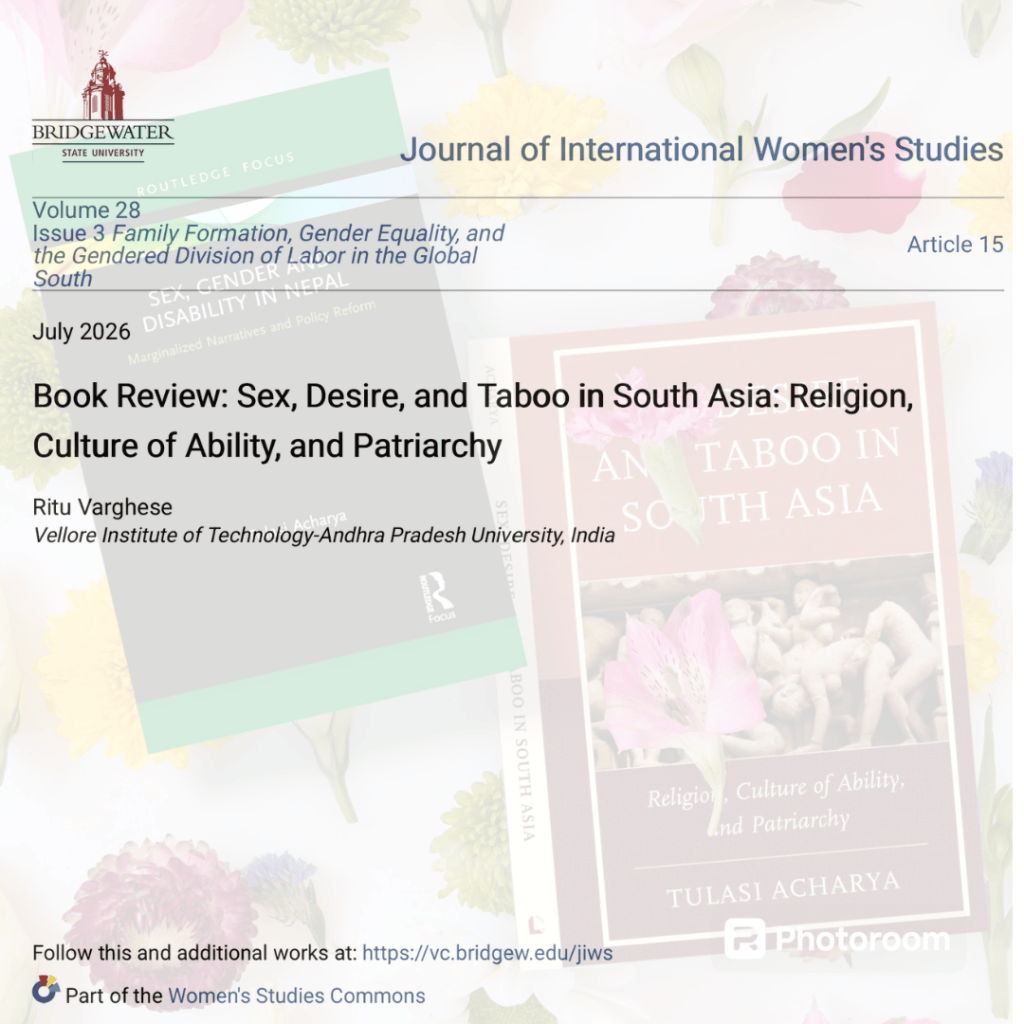
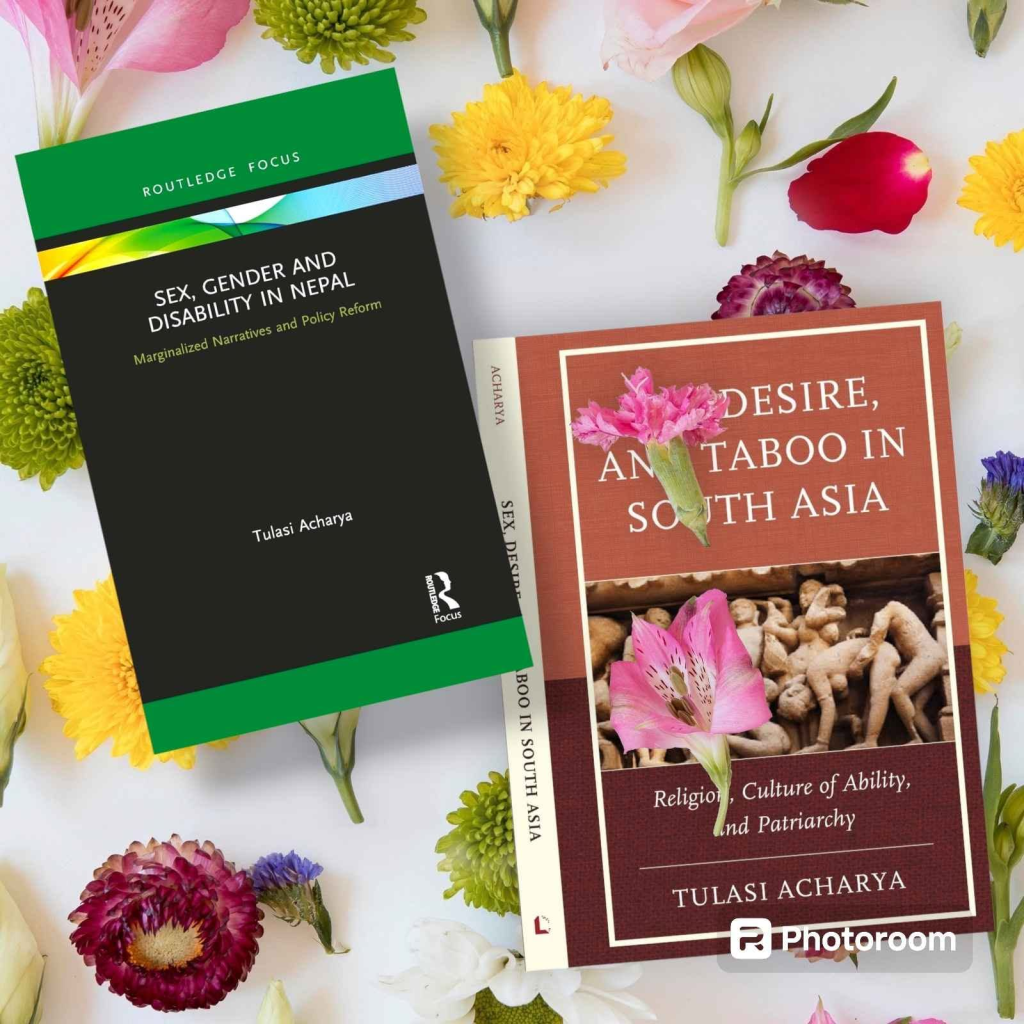
Ritu Varghese reviews “Sex, Desire, and Taboo in South Asia: Religion, Culture of Ability, and Patriarchy” by Tulasi Acharya. The review was published in the Journal of International Women’s Studies. She writes:
“Tulasi Acharya’s Sex, Desire, and Taboo in South Asia boldly explores the intersections
of sex and desire as complex cultural constructs grounded in religious beliefs, taboos, and
patriarchal structures in the South Asian context. Divided into six exhaustive chapters, the book
identifies the cultural and historical interplay of sexual taboos and the moral debates surrounding
them. The objective of Acharya’s study arises from a paradox—while sex has historically been
glorified in scripture and ancient sculpture in South Asia, sexuality and carnal desire have also
been socially and politically controlled and delimited. Acharya contends that India and Nepal are
both hailed as the birthplaces of popular sex manuals and ancient erotic architecture, yet they
have also exercised patriarchal restraints on sex and desire as taboos. These nations, and others
in South Asia, offer both a rich cultural heritage and contested discourses about sexuality that
make them worthwhile sites for scholarly investigation.”
Here is a complete review below:


Leave a Reply