Dr. Tulasi Acharya has authored nearly a dozen works spanning various genres. His work, “Mrityu Diary,” delves into the journey of death, encompassing the lives of his loved ones, portraying sorrow, and offering perspectives on death itself.
At its core, the book explores the inevitability of death—how amidst life’s fluctuations, humans grapple with the certainty of their eventual demise. Despite this awareness, they persist in indulging in greed, envy, neglecting duties, and refusing to acknowledge limitations. Instead, they criticize others, search for faults, and nurture desires, almost attempting to shift the date of their own death onto someone else.
Similar to birth being an undeniable truth, death stands as its ultimate conclusion—a subject Acharya deeply explores in “Mrityu Diary.” The book initiates discussions about life post-birth, its duration, the varied forms of death, their causes, and the gradual process of dying. These mysteries remain uncharted territories for humanity. Acharya commences his narrative by recounting an unfortunate incident during his return to Nepal from abroad, an experience that aligns with the essence of his writings.
The book navigates through diverse aspects, including the fear cancer patients confront when facing mortality, their enduring pain, and the lack of progress in finding a cure. Referencing foreign authors and scholars, Acharya endeavors to elucidate the concept of death. He delves into the suffering of cancer patients, aiming to understand their pain.
Moreover, the sudden loss of his mother-in-law prompts Acharya to present life’s uncertainty and incompleteness. The book challenges readers to contemplate the unfulfilled aspects of life and its final moments, encouraging dialogue about death and its varied implications on ordinary individuals. Its strength lies in its direct presentation and argumentation on mortality, urging ongoing discussions, especially regarding death’s complexities.
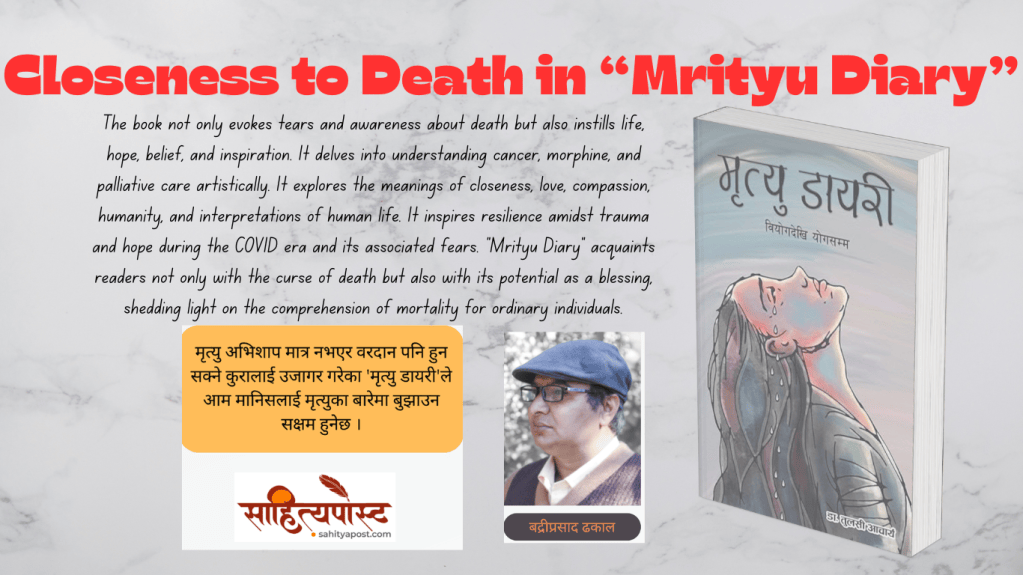
The book not only evokes tears and awareness about death but also instills life, hope, belief, and inspiration. It delves into understanding cancer, morphine, and palliative care artistically. It explores the meanings of closeness, love, compassion, humanity, and interpretations of human life. It inspires resilience amidst trauma and hope during the COVID era and its associated fears. “Mrityu Diary” acquaints readers not only with the curse of death but also with its potential as a blessing, shedding light on the comprehension of mortality for ordinary individuals.
Acharya’s literary prowess shines as he transcends familial contexts to address a broader audience, encapsulating diverse perspectives on cancer, its types, various therapies, and the deaths linked to it. This broadens the scope of his writing.
The book vividly captures Kripa’s turmoil after her mother’s sudden demise, depicting a period filled with uncertainty and the constant fear of losing her father within five months of her mother’s passing. The book portrays the harsh reality of a daughter coping with her father’s condition after losing her mother.
Kripa’s struggle, witnessing her father’s solitude, and eventually discovering his declining health within a short span prompt her to contemplate her endurance. Despite her inability to fully comprehend the situation, Kripa battles against the impending pain, eventually finding the courage to transform grief into strength. In that moment, she realizes the inexplicable courage within oneself to endure such suffering, empowering women to embody symbols of resilience.
The book not only evokes tears and awareness about death but also instills life, hope, belief, and inspiration. It delves into understanding cancer, morphine, and palliative care artistically. It explores the meanings of closeness, love, compassion, humanity, and interpretations of human life. It inspires resilience amidst trauma and hope during the COVID era and its associated fears. “Mrityu Diary” acquaints readers not only with the curse of death but also with its potential as a blessing, shedding light on the comprehension of mortality for ordinary individuals.
The book, titled “Mrityu,” is divided into 39 sections, published by Bhundi Puraṇa Publications, and is available in the market, spanning 260 pages with an original price of 490 Nepalese rupees.
(This review is a thematic translation of originally written in Nepali and published in Sahitya Post, a literary online portal, dated December 12, 2023)
A review in Nepali is below (Cited from Sahitya Post):
सिर्जनशील लेखनमा स्नातकोत्तर गरेका तुलसी आचार्य नेपाली साहित्यका विभिन्न विधामा लगभग एक दर्जन कृति प्रकाशित गरिसकेका व्यक्तित्व हुन् । प्रवासमा बसेर नेपाली साहित्यमा सक्रिय भूमिका निर्वाह गरिरहेका आचार्यको मृत्युको डायरी ( २०८०) मृत्युको नजिकबाट नियालेर लेखिएको गैरआख्यान साहित्य हो । आफ्ना प्रियजनको मृत्यु निकटको जीवनलाई नियालेर, दुखेर, हेरेर लेखिएको यस कृतिले एकपटक मृत्युलाई फेरि सम्झाएको छ ।
सबैलाई थाहा भएकै विषय हो ‘जन्मेपछि मर्नुपर्छ’, जीवनमा कतिपय कामकुराहरूमा मानिस अलमलिँदै जानुपर्छ चाहे त्यो सुख होस् वा दुःख । यस बीचमा मानिस छिनछिनमा सम्झिरहन्छ, ‘एकदिन मर्नु त छँदै छ’ । तर पनि लोभ गर्न छाड्दैन, ईष्र्या गर्न छाड्दैन, आफ्नो कर्तव्य गर्दैन, मर्यादामा रहँदैन । थप अरूको चियोचर्चो गरिरहन्छ, दोष देखिरहन्छ, लाञ्छना लगाइरहन्छ सक्ने भए आफ्नो मृत्युको मिति पनि अर्कैकोमा सारेर झेल गर्थ्यो होला । जसरी जन्म सत्य हो, मृत्यु अन्तिम सत्य हो यस्तै विषयलाई लिएर लेखिएको छ, आचार्यको ‘मृत्यु डायरीमा’ ।
मृत्यु डायरी
मानिस जन्मेपछि नमरुञ्जेल के कस्तो जीवन भोगिरहन्छ ? उसको आयु कति लामो छ ? मृत्युको रूप कसरी बन्छ, मृत्युको कारण के हुन्छ र अन्त्यमा कसरी मर्छ ? यी कुरा मानिसका लागि अनभिज्ञ र रहस्य हुन् । लेखकले परदेशबाट बिदा मनाउन घरदेश आएका बेला अनायासै घटेको दुर्घटनाबाट विषय प्रारम्भ गरेका छन् । यस अनुभूतिमा तुलसी आचार्यले जे लेखेका छन्, त्यो देखिएको भोगिएको अवस्था हो ।
क्यान्सरका बिरामीले सायद पलपल मृत्यु बोकेर हिँडिरहँदा तिनका आफन्त र सन्तानले बोकेको डर स्वाभाविक हो । म पनि यस्ता घटनामा नजिकबाट परिचित छु । अझ रोगले दुखाएका मान्छे उर्फ रोगीमा डरका अनेक रूपले कति आक्रमण गरे होलान् ? आकलन नै गर्न सकिन्न । अनायासै पत्नीको मृत्युपछिको जीवनमा देखिएका अभाव र रोग निदानका लागि गरिएको प्रयास स्पष्ट देखिन्छ । त्यस प्रयाससँगै निको नहुने क्यान्सरलाई बाआमाले सन्तानका अगाडि प्रदर्शन गर्दैनन् भन्दै मृत्युबोधका अनेक पीडालाई सन्तानसमक्ष राखेर दुख दिन नचाहने विशेष कुरालाई बुझाउन खोजेको छ ।
विदेशी लेखक, विद्वान्का भनाइलाई उद्धृत गर्दै आचार्यले मृत्युलाई पुस्तकमा बुझाउन खोजेका छन् । चिकित्सक क्यलनिथिको भनाइ पुस्तकमा उल्लेख छ, ’मैले मेरा क्यान्सरका बिरामीलाई दुखाइका बारेमा बुझाएँ तर जतिबेला म आफैँ क्यान्सर रोग लागेर दुख्न थालें, त्यति बेला थाहा भयो मैले बुझेको दुखाइ त कहाँ मैले बुझाए जति मात्र रहेछ र ? डाक्टर भएर बिरामीको उपचार गर्नु र आफैँ बिरामी भएर डाक्टर भए ठाउँ जानु दुई फरक अनुभव रहेछन् । बिरामीको दुखाइको लेभल डाक्टरलाई थाहा हुँदो रहेनछ ।’
डेनिस लेखक हान्स क्रिश्चियन एन्डरसनले भनेका रहेछन्, ’जीवनमा बाँच्नु मात्र पर्याप्त छैन, स्वतन्त्र भएर खुसीसाथ फुल्न सक्नुपर्छ ।’
पृथ्वी ढलेको दिन शीर्षकबाट सुरु भएको यस कृतिमा श्रीमती कृपाकी आमाको उर्फ सासूको आकस्मिक निधनले निम्त्याएको परिवेश र परिस्थितिलाई नै प्रस्तुत गर्दै जीवनको अनिश्चितता लाई सम्बोधन गरिएको छ । कति कुरा अपूरो रहन्छन् कति अधुरा रहन्छन् भन्दै जीवनको अन्तिम घडी कसैलाई थाहा हुन सक्छ ? जन्म छ र त मृत्यु छ । तर यी दुई कहिल्यै नभेटिने दूरीमा रहन्छन् नदीका दुई किनारा जस्तै हुन् जुनसुकै बेला जहाँ पनि हुन सक्छ भन्ने मृत्युबोध यहाँ गराइएको छ ।
त्यसैले यस कृतिलाई ‘जीवन भर्सेस मृत्यु !’ मान्न सकिन्छ । सबैले अब मृत्युका बारेमा छलफल गरी मृत्युलाई सजिलै लिन सक्ने बन्नुपर्दछ भन्ने लाग्दछ । जीवन, आफन्त, रोग, पिडासँगै पुनः मृत्युबोध पुस्तकले यी सबै कुरालाई फेरि सम्झाएको छ, धेरै कुरा समेटेको छ । त्यसैले मृत्यु डायरीमा जीवन र जगत् छ र त यसले जो कोही पाठकको मुटु अवश्य छोएको हुनेछ ।
पढिरहँदा पाठकले कुनै दृश्य चित्रभित्र आफैँलाई उभिरहेको पाउँछ । किनकि पुस्तकको सशक्त पक्ष भनेको सरल प्रस्तुति र बगाइ हो । समस्यामा मानिसमा द्विविधा उत्पन्न हुन्छ, भनौँ छटपटाहट अब के होला ? अब कसो होला ? भन्ने जिज्ञासा पाठकलाई जगाइरहन सक्नु पनि लेखनको विशेषता हो । हामीले बेलाबेलामा मृत्युमाथि अब खुलेरै बहस गर्नुपर्छ भन्ने पाठ पनि पुस्तकले सिकाएको छ । पुस्तकमा लेखकले मृत्युका अनेक रङ्ग र अनुहारलाई सरल शैलीमा प्रस्तुत गरेका छन् जसले आम मानिसमा सहजै प्रभाव पार्दछ ।
आचार्यको लेखकीय क्षमता त्यहाँ पनि झल्कन्छ जहाँ उनी सास ससुराका सन्दर्भभन्दा बाहिर पुगेर संसार चिहाएका छन् । क्यान्सर रोग, तिनका प्रकार, किमोथेरापीका अनेक प्रकार, यससँग जोडिएका अनेक व्यक्तिको मृत्यु, यसबारे विभिन्न व्यक्तित्वले बोलेका सन्दर्भ र घटना आदि सबै समेटेका छन् उनले । यसले उनको लेखकीय आयाम फराकिलो बनेको छ ।
जब पत्नी कृपाकी आमाको अचानक अवसान भयो, तब त्यसले उनका जीवनका सम्पूर्ण रङहरू धमिल्याइदियो । इन्द्रेणीमय क्यानभासजस्तो उनको जीवनमा बदलाव आयो । अल्पायुमै अवसान भएपछि उनको होस गुमेजस्तो भयो कृपाको । उनका आँखाहरू सुके । ओठहरू कलेटी परे । आशाहरू मरे । सपनाहरू डढे । मानौँ, उनका लागि अब संसार सबै खरानी भयो । त्यो चोट, त्यो पीडा अनि त्यो दुःखान्त त्यतिमा सीमित रहेन । आमाको मृत्युपछि बाबुको अनुहार हेरेर बाँच्ने उनको झिनो आशा पनि आमालाई बिदा गरेको दुई महिनामै चकनाचुर भयो, जब उनले बुबालाई क्यान्सर भएको थाहा पाइन् । आमा बितेको पाँच महिनाभित्रै उनले जन्मदाता बुबा पनि गुमाइन् भन्ने यथार्थपरक घटनाको चित्रण मृत्युको डायरीमा दृश्यविम्ब बनेर आएको छ ।
आमा बितेपछि बाबाको एक्लोपन, केही महिनामै बुबालाई निको नहुने रोग लागेको थाहा पाएपछि उनीभित्रको अवस्थालाई कसरी सहिन् होला भन्दै बाको स्वरूप जसलाई उनी ’आशा, भरोसा, आँट, विश्वास र आत्मविश्वासको पहाड’ भन्थिन्, त्यही पहाड गर्ल्यामगुर्लुम ढलेपछि कृपाको भरोसाको अवस्था के भयो होला ? भन्ने प्रश्नले मर्मलाई भेद गरेको छ । केही बुझ्न नसक्ने छोरी कृषालाई काखी च्यापेर त्यो दुःखान्त अवस्थासँग उनी लडिन् । लागेको थियो त्यो पीडाले उनलाई गलाउनेछ, सदाका लागि तर धन्य, उनले साहस जुटाइन् र उभिइन् शोकलाई शक्तिमा परिणत गर्दै । त्यति बेला थाहा भयो, मान्छेभित्र सहन सक्ने अथाह साहस प्रकृतिले दिँदो रहेछ भनेर पनि नारीलाई साहसको प्रतिमूर्तिलाई प्रस्तुत गरिएको छ ।
दुखको अवस्था आफ्नो छटपटाहट र पत्नीले बिताएका हरेक पल पति हुनुका नाताले बचाउने प्रयास गरिरहेँ भन्ने कुरा म पात्रले भनेका छन् : मैले आशा मार्न र मर्न दिइनँ । कोसिस गरेँ आँसु झर्न नदिन । लाग्यो – उनले बाँचेभोगेको त्यो पल, आमाबुवासँगको सामीप्य र दुवैको अवसानसँगै उनको जीवनमा आएको बदलाव र मैले सिकेका पाठ आदि सबै सबै पुस्तकका पृष्ठमा जीवन्त बनाऊँ भन्ने अभिलाषाले पुस्तक लेखेका कुरा आचार्यले बताएका छन् ।।
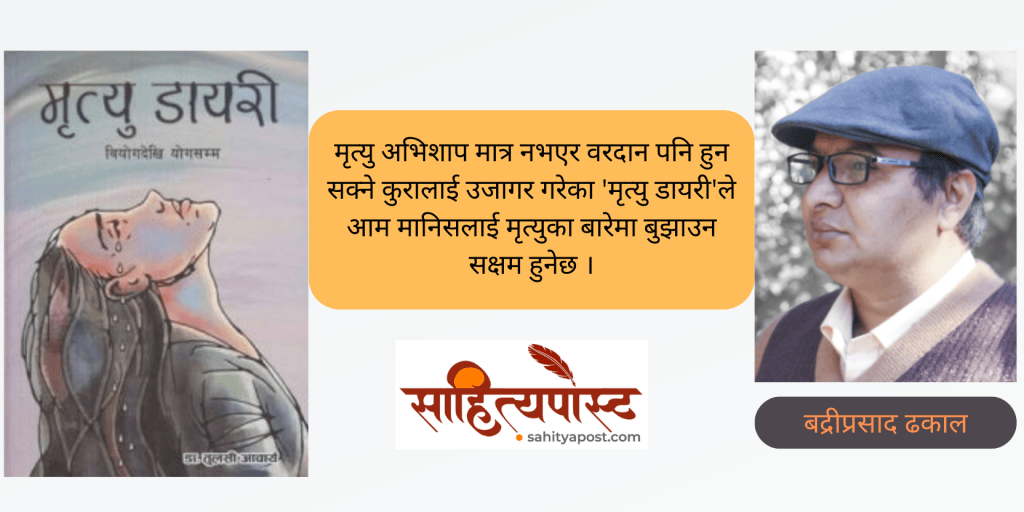
यस पुस्तकले मृत्युबोध, मृत्युचेतना, मृत्युको निकटतालगायत आँसु मात्र दिने छैन, जीवनप्रतिको आस, भरोसा, आत्मविश्वास र प्रेरणा पनि दिनेछ । मृत्युलाई बुझ्ने र जीवनलाई गहिरिएर नियाल्ने अवसर पनि दिनेछ । क्यान्सर, मोर्फिन, प्यालियटिभ केयरलाई आलंकारिक रूपमा पनि बुझ्न प्रेरणा मिल्नेछ । आमाबुबाको सामीप्य, प्रेम, सद्भाव, मानवीयता र त्यसले मानवीय जीवनमा दिने अर्थ र दर्शनलाई बुझ्न सहयोग मिल्नेछ । कोरोनाकाल र मृत्युसँगै आएको त्रास र त्यसभित्रको आशा दुवैलाई नियाल्न अभिप्रेरित गर्नेछ । मृत्युलाई चिन्ने र मृत्यु अभिशाप मात्र नभएर वरदान पनि हुन सक्ने कुरालाई उजागर गरेका ‘मृत्यु डायरी’ले आम मानिसलाई मृत्युका बारेमा बुझाउन सक्षम हुनेछ भन्ने लाग्दछ ।
पुस्तककै नाम मृत्यु डायरी जसलाई योगदेखि वियोगसम्म भनिएको छ । ३९ भागमा विभाजित यस कृतिलाई भुँडीपुराण प्रकाशनले बजारमा ल्याएको हो । २६० पृष्ठमा संरचित यस पुस्तकको मूल्य ४९० रहेको छ ।



Leave a Reply