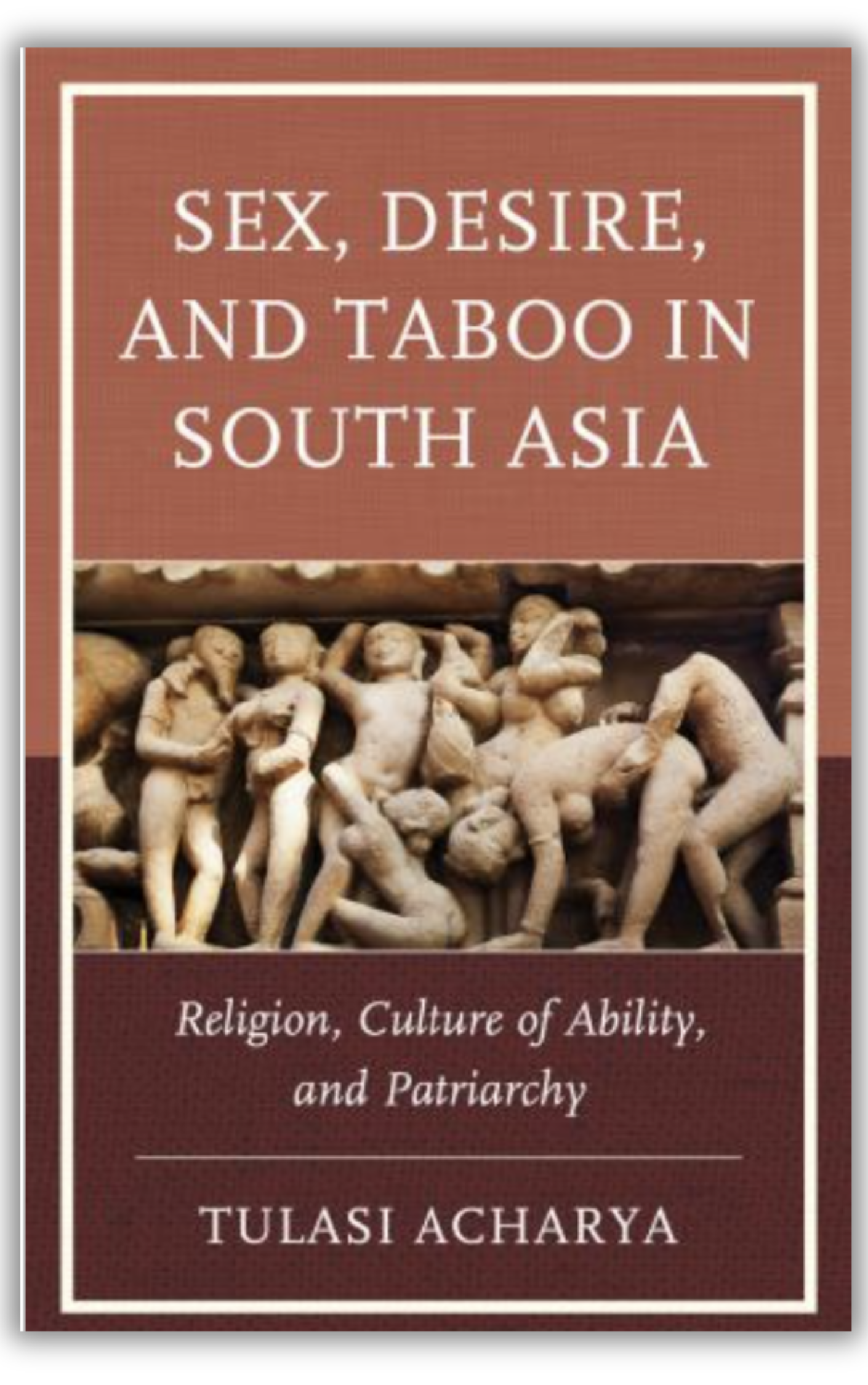
Sex, Desire, and Taboo in South Asia
Religion, Culture of Ability, and Patriarchy
Sex, Desire, and Taboo in South Asia: Religion, Culture of Ability, and Patriarchy explores the intersection of religion, culture of ability, and patriarchy in relation to sex, desire, and taboo. Divided into six chapters, this book utilizes Western theorists such as Foucault and Freud in conjunction with Spivak's theory of the subaltern to establish a theoretical context on sexuality. Through this lens, Acharya evaluates the intersection between religion, patriarchy, and gender and their impact on the perception of sex and desire as a taboo within a South Asian context. The book also examines how individuals contend with their sexual desires, using literature and social media to display the stark difference between the cultural promotion of antisexualism and existing ancient texts on the art of erotica, such as the Kamasutra. In doing so, Sex, Desire, and Taboo in South Asia expands on Eurocentric notions of sexuality and addresses the conditions of the subaltern to explore the complex dynamics of sex in South Asia.
Critical Praise & Endorsements
"Sex, Desire, and Taboo in South Asia: Religion, Culture of Ability, and Patriarchy accurately encapsulates the themes and discussions within the book. The work's distinctive contribution to the literature is highly appreciated, addressing vital gaps in understanding the intersectionality of Sex, Desire, and Taboo in South Asia: Religion, Culture of Ability, and Patriarchy in the South Asian context. The book promises to be a valuable addition to scholarly discourse, providing nuanced insights into a complex and multifaceted subject matter."
— Kay Traille, Kennesaw State University"The book critically examines the paradoxes and complexities surrounding sex, desire, and taboo in Nepal and India, situated within their cultural and religious context. Employing a multidisciplinary approach that draws on Foucauldian theory, psychoanalysis, and cultural critique, the book provides a comprehensive analysis of the ways in which religion, culture, and patriarchy influence perceptions of sex and desire. The book serves as a thought-provoking exploration of the intersection between tradition, modernity, and human sexuality in the Global South, advocating for a nuanced understanding that transcends Western frameworks and embraces the local context."
— Bhanu Bhakta Acharya, University of Canada"Sex, Desire, and Taboo in South Asia is a book that is hopefully the start of an expanding discussion about sexuality and eroticism. Up until recently such a discussion has been dominated by Western voices privileging the Western experience and concerns. Acharya's book is a fascinating study showing how such a discussion has been predated by far older discourses about body and desire from other parts of the world. As many in the West are now re-thinking what was previously thought to be basic natural categories, this book is a very helpful and important addition to that discussion."
— Fred Fejes, Florida Atlantic University"Acharya's volume offers a comprehensive view of sexuality in South Asia from the classical past to the present. With a firm theoretical grounding, Acharya applies the concepts of taboo and transgression, along with colonial oppression, in order to trace a shift from a more open and artistic eroticism to a dominant, patriarchal discourse of sexual repression. Carefully researched with extensive bibliography, this text compiles a wealth of information from literary and film works, the visual arts tradition, online survey responses, and contemporary religious practices. Acharya moves away from heteronormative notions of sexuality to explore transgender, intersex, and sex and disability in contemporary South Asia. Acharya's volume shows how literature and the arts push the boundaries of sexuality in South Asian society by revealing glimpses of a multifaceted reality hidden beneath patriarchal strictures and norms. With its accessible prose and its thoughtful and sensitive approach, Acharya's text will be a touchstone for scholars and general readers alike."
— Bridget Pupillo, Connecticut College"Dr. Tulasi Acharya's Sex, Desire, and Taboo in South Asia explores the paradoxes of a region where erotic art and sexual manuals have long existed, yet open discussions about sex remain taboo."
— Kosh Raj Koirala, Republica"Sex, Desire, and Taboo in South Asia is a provocative and timely contribution to the ongoing discourse about sexuality, power, and culture in the region. It challenges readers to rethink the complex relationship between religion, culture, and patriarchal structures, offering new insights into how societal change may be achieved through education and greater awareness."
— Gopi Krishna Dhungana, The Annapurna Express"The book's strength lies in its tackling of otherwise unexplored themes, such as the sexual habits of older persons—a subject that is not only under-researched but also a taboo for discussion, especially in India. The book's rather strong and relevant conclusion that 'until the healthy understanding of sex replaces the current cultural discourses and rhetoric of sex in South Asia, no punishment will be able to stop rape incidents' (p. 185)…the book drives home Acharya's argument that social taboos, under the garb of civilization, prevented discussions about sex and sexuality, deteriorating it into something 'uncivilized and filthy,' an act exploited as a commodity or a means of generating capital, rather than being perceived as a 'crucial aspect of healthy living' (p. 187). The book would be of interest to scholars of social anthropology, sociology, and those studying South Asia."
— Devapriya Sanyal, St. Joseph's University, Book review published in South Asia Research, Sage Journal.